Deck Repair & Replacement in Dripping Springs, TX
For 40+ years, All Seasons has built custom deck repair & replacement for Dripping Springs homeowners. 5,000+ outdoor projects completed across Central Texas. Fixed pricing, full warranties, same crew start-to-finish.
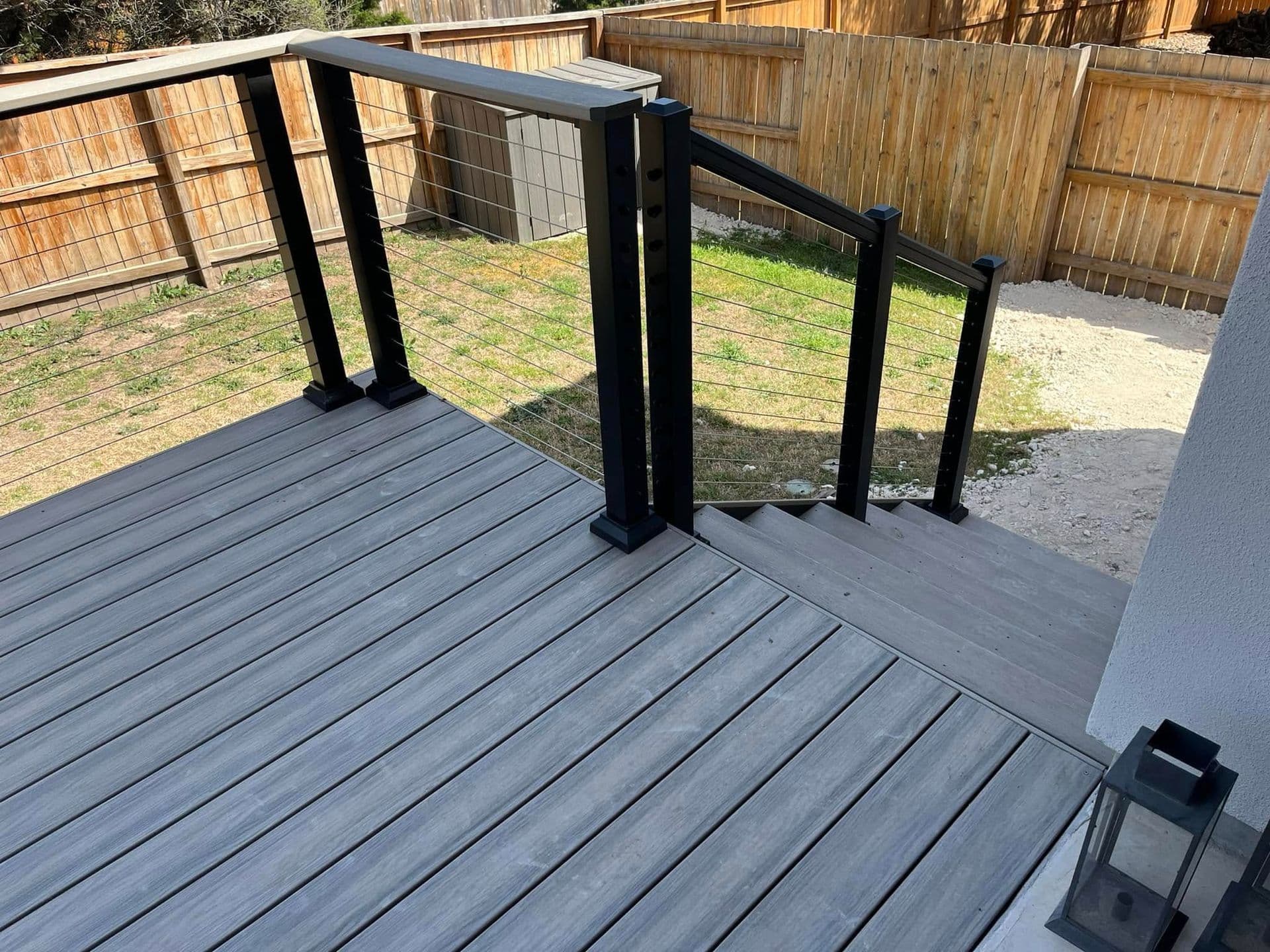
All Seasons Decks repairs decks in Dripping Springs, from newer homes in Caliterra and Headwaters to older ranch houses on acreage. Older decks here are often cedar, built long before current railing rules, and exposed to hail, wind and termites on rural lots. We inspect the whole structure, tell you plainly whether it is worth repairing, and price the fix in writing.
Older Cedar Decks on Ranch Homes
Cedar decks last about 20 to 25 years with regular care. Many Dripping Springs ranch decks are older than that or have gone years without sealer. The boards gray and split, and the framing, often treated pine under cedar boards, starts to soften at the tops of joists and the bases of posts.
If the framing is sound, new boards and railings bring the deck back. Resurfacing a 300 sq ft deck with new railings runs $8,000 to $15,000. Cedar replacement boards keep the rustic look. Composite ends the sealing cycle.
Termites and Rural Lots
On acreage with brush, cedar and wood piles near the house, termites have plenty to feed on. They go for post bases, stair stringers and skirting in contact with soil. We probe those spots, look for mud tubes, and recommend treatment before replacing damaged wood so the new wood is not next.
Hail, Wind and Loose Railings
Open Hill Country sites take the full force of spring storms. Hail splits softwood boards and cracks older composite. Wind loosens railing posts that were only nailed on. Current code calls for guards at least 36 inches high on decks 30 inches or more above grade, with openings under 4 inches, and many older ranch decks do not meet it. Railing replacement runs $35 to $70 per linear foot installed, so a 50 ft run is $1,750 to $3,500.
For storm damage, photograph it before anything is moved. We put the repair scope in writing, separating storm damage from ordinary aging, which helps with an insurance claim.
Permits and Septic Systems
Inside city limits, permits are issued by the City of Dripping Springs. Outside them, your county and any HOA or deed restrictions govern the work, and we confirm what applies. If a repair needs new footings, we locate the septic tank and drain field first so nothing goes where it should not.
Rural decks are also more likely to have been built without permits or inspections years ago. That does not make them unsafe, but it means we assume nothing about what is inside. We check post sizes, beam spans and fasteners against current practice, and when something falls short, we explain it and include the fix in the written quote.
Remote sites can add travel and access time, which goes into the fixed quote up front. Most repairs finish in 1 to 4 days of work.
We Know Dripping Springs Backyards
Dripping Springs is Hill Country on limestone, with live oaks, larger lots and a lot of homes outside city limits on septic. Master-planned communities like Caliterra and Headwaters sit alongside acreage off Highway 290 and FM 12. Where your house sits decides who permits the project and where a deck can go. We build decks, covered patios, pergolas, gazebos and outdoor kitchens in the Dripping Springs area.
Permits, HOAs, soil and local building tips for Dripping Springs
"Dripping Springs is Hill Country, so you're working with slopes, rock and big live oaks. We plan around all of it. On a septic lot, the first thing we find is the tank and the drain field, because you don't put footings over them. The builds out here tend to be bigger because the properties are bigger."
- Mark Toomey
Why Deck Repair & Replacement Matter Here
A failing deck isn't a cosmetic problem, it's a safety problem. Most deck collapses trace back to two failure points: the ledger connection pulling away from the house, and rotted posts or footings giving way under load. Both hide from view until they let go, usually when the deck is full of people. In Central Texas, our expansive clay soil heaves footings seasonally and our brutal sun cooks fasteners and flashing. A deck that was built fine in 2005 may not be fine today. An inspection costs you a phone call; ignoring the wobble can cost a lot more.
A Straight Answer, Not a Sales Pitch
We tell you whether your deck is worth repairing before we quote anything. If replacement is the smarter spend, we say so and show you why - rot you can probe, connections you can see moving. No scare tactics, no invented urgency.
42 Years of Diagnostic Experience
Since 1984 we've built, repaired, and torn out thousands of Central Texas decks. We know exactly where decks fail here: ledger flashing, post bases, stair stringers, and footings in clay soil. We check the failure points other contractors walk right past.
Repairs Done to Current Code
Old decks were often built to codes that no longer exist - 2x2 railings, notched posts, nailed ledgers. When we repair, we bring the repaired sections up to today's standards, so your deck is genuinely safer, not just prettier.
Fixed Written Pricing
Repair work is where some contractors love to 'discover' problems mid-job. Not us. After we open things up and assess, your quote is your price, in writing. We've been estimating this work long enough to get it right the first time.