Deck Repair & Replacement in Lakeway, TX
For 40+ years, All Seasons has built custom deck repair & replacement for Lakeway homeowners. 5,000+ outdoor projects completed across Central Texas. Fixed pricing, full warranties, same crew start-to-finish.
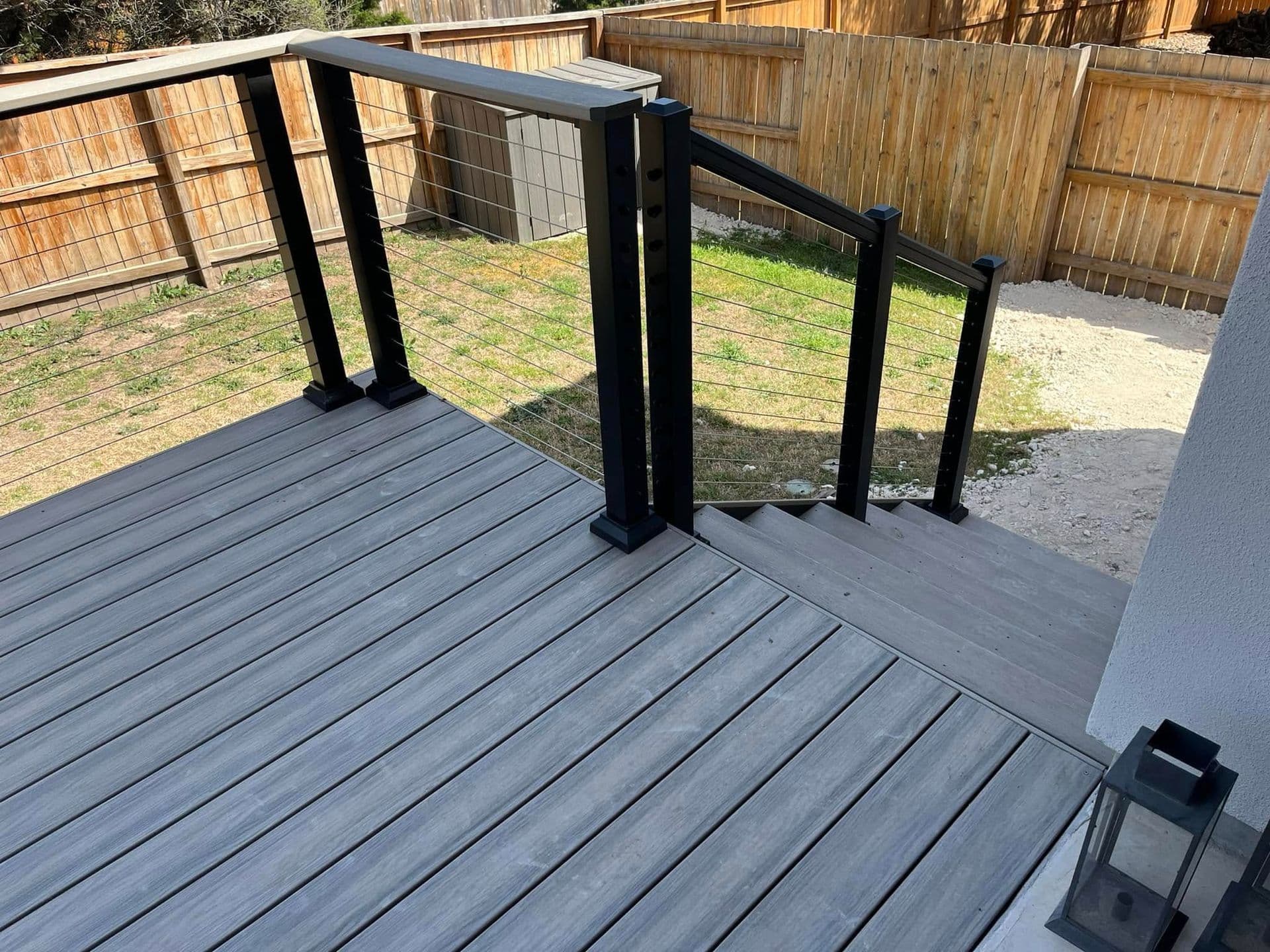
All Seasons Decks repairs decks on Lakeway's sloped, lake-view lots, where a deck can stand well above the grade below it. On a tall deck the stakes are higher: a failed ledger or rotted post on a hillside has a long way to fall. We inspect the whole structure from the ground up, including the bracing and stairs most owners never see.
Why Tall Decks Need a Different Inspection
On a hillside deck the parts that matter are underneath and far below the boards. We walk the slope and check every post base for rot and every post-to-beam connection for movement. We also check whether the deck has lateral bracing at all. Older tall decks often have none, and they sway when people move across them.
Adding knee or diagonal bracing and bolting loose connections is a common Lakeway repair. It typically falls in our $2,000 to $8,000 structural range, depending on height and the number of posts.
Long Stair Runs
Hillside decks often have long stair runs down to the yard or a pool. Stringers that sit on soil or rock rot at the bottom, treads split in the sun, and long runs sometimes lack an intermediate landing or a handrail that is easy to grip. Rebuilding a stair run on new footings is often the most important repair on a Lakeway deck.
Cable Railings and View Railings
Many Lakeway decks use cable rail to keep the lake view open. Over time cables lose tension, and slack cables can spread far enough to fail the 4 inch sphere rule for guard openings. Retensioning is simple. Corroded fittings or bent end posts need replacement. Full railing replacement runs $35 to $70 per linear foot installed, so a 60 ft run is $2,100 to $4,200.
Repair or Rebuild on a Slope
A rebuild on the existing footprint runs $40 to $60 per sq ft, and hillside access adds labor. Reusing sound footings drilled into rock saves real money on a Lakeway site, so when the piers are good, we lean toward repair or a rebuild that keeps them. Permits are issued by the City of Lakeway, and structural repair will generally need one.
Access shapes the price on a Lakeway repair more than on a flat lot. Materials and tools may have to be carried down a slope, and work on tall posts often needs scaffolding or a lift. We price that labor into the fixed quote after walking the site, so you are not billed for it as an extra once the crew is on the hill. Where the repair touches the view railing or a visible fascia, we also match materials so the fix does not stand out from the water side.
For a lake-view deck, that often means a new walking surface and railings on the existing structure, with bracing added underneath.
We Know Lakeway Backyards
Lakeway lots are built on the limestone hills above Lake Travis, and many of them fall away steeply from the back of the house toward the water or a canyon. That means the deck is often the main way to use the yard at all, and its railing decides what you see from inside. We build hillside decks, covered patios, pergolas, gazebos and outdoor kitchens across Lakeway.
Permits, HOAs, soil and local building tips for Lakeway
"First thing I look at in Lakeway is the view. Which way does the lake sit, where does the sun set. You want the deck oriented to take advantage of that, and railings that don't block it. Hillside builds take more engineering and more pier work than a flat lot, and we price that in up front."
- Mark Toomey
Why Deck Repair & Replacement Matter Here
A failing deck isn't a cosmetic problem, it's a safety problem. Most deck collapses trace back to two failure points: the ledger connection pulling away from the house, and rotted posts or footings giving way under load. Both hide from view until they let go, usually when the deck is full of people. In Central Texas, our expansive clay soil heaves footings seasonally and our brutal sun cooks fasteners and flashing. A deck that was built fine in 2005 may not be fine today. An inspection costs you a phone call; ignoring the wobble can cost a lot more.
A Straight Answer, Not a Sales Pitch
We tell you whether your deck is worth repairing before we quote anything. If replacement is the smarter spend, we say so and show you why - rot you can probe, connections you can see moving. No scare tactics, no invented urgency.
42 Years of Diagnostic Experience
Since 1984 we've built, repaired, and torn out thousands of Central Texas decks. We know exactly where decks fail here: ledger flashing, post bases, stair stringers, and footings in clay soil. We check the failure points other contractors walk right past.
Repairs Done to Current Code
Old decks were often built to codes that no longer exist - 2x2 railings, notched posts, nailed ledgers. When we repair, we bring the repaired sections up to today's standards, so your deck is genuinely safer, not just prettier.
Fixed Written Pricing
Repair work is where some contractors love to 'discover' problems mid-job. Not us. After we open things up and assess, your quote is your price, in writing. We've been estimating this work long enough to get it right the first time.