Deck Repair & Replacement in Austin & Central Texas
Rotted boards, a railing that moves when you grab it, boards that bounce when you walk across them - these are your deck telling you something. After 5,000+ projects since 1984, we can look at a deck and tell you exactly what's wrong, what it costs to fix, and whether fixing it even makes sense. Call (512) 812-8168 and we'll come take a look. If a $2,000 repair buys you ten more good years, we'll tell you that. If a repair would be throwing money at a deck that's done, we'll tell you that too.
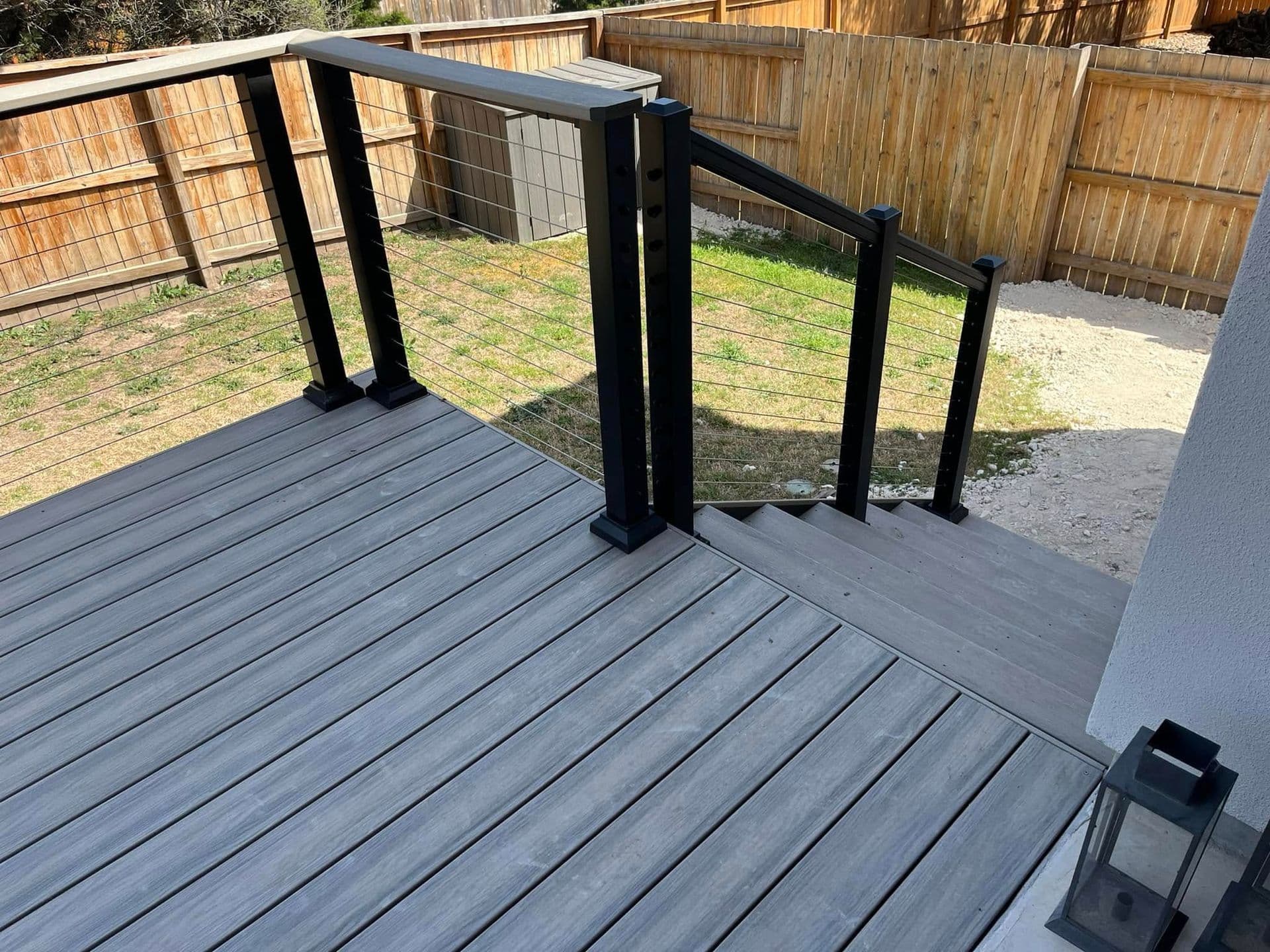
From Our Team on Repair vs. Replace
Here's the honest truth about deck repair: the damage you can see is almost never the whole story. Gray, cracked deck boards look bad, but boards are the cheap part. What decides repair versus replace is what's underneath - the ledger connection to your house, the joists, the beams, and the footings. I've crawled under decks with beautiful new boards sitting on joists so rotten I could push a screwdriver through them. And I've seen ugly, weathered decks with bone-dry framing that just needed a new walking surface and railings. That's why we start every repair call with a real inspection, not a guess from the driveway. We'd rather tell you the truth today and earn your replacement job in five years than sell you a repair that fails in two. After 42 years in this business, our reputation is worth more than any single job.
Why It Matters
A failing deck isn't a cosmetic problem, it's a safety problem. Most deck collapses trace back to two failure points: the ledger connection pulling away from the house, and rotted posts or footings giving way under load. Both hide from view until they let go, usually when the deck is full of people. In Central Texas, our expansive clay soil heaves footings seasonally and our brutal sun cooks fasteners and flashing. A deck that was built fine in 2005 may not be fine today. An inspection costs you a phone call; ignoring the wobble can cost a lot more.
A Straight Answer, Not a Sales Pitch
We tell you whether your deck is worth repairing before we quote anything. If replacement is the smarter spend, we say so and show you why - rot you can probe, connections you can see moving. No scare tactics, no invented urgency.
42 Years of Diagnostic Experience
Since 1984 we've built, repaired, and torn out thousands of Central Texas decks. We know exactly where decks fail here: ledger flashing, post bases, stair stringers, and footings in clay soil. We check the failure points other contractors walk right past.
Repairs Done to Current Code
Old decks were often built to codes that no longer exist - 2x2 railings, notched posts, nailed ledgers. When we repair, we bring the repaired sections up to today's standards, so your deck is genuinely safer, not just prettier.
Fixed Written Pricing
Repair work is where some contractors love to 'discover' problems mid-job. Not us. After we open things up and assess, your quote is your price, in writing. We've been estimating this work long enough to get it right the first time.
Same Crew, Start to Finish
The experienced crew that starts your repair finishes it. On repair work that matters even more than new construction, because good repair means understanding how the original deck was built and matching it properly.
Warranty on the Work
Our repair work carries our 1-year workmanship warranty in writing, and any new materials carry their manufacturer warranties, up to 50 years on premium composite. A repair from us isn't a patch, it's a fix.
Our Process
Call Us & Describe the Problem
Call (512) 812-8168 and tell us what you're seeing - soft boards, a leaning post, a railing that moves, storm damage. We can often tell you over the phone whether it sounds urgent and what the likely fix looks like. If your deck feels unsafe, stay off it until we've looked at it.
10 minutes
On-Site Inspection
We inspect the parts of your deck that actually decide its fate: the ledger and flashing at the house, the joists and beams underneath, post bases and footings, stairs, and railings. We probe suspect wood, check connections, and show you what we find - you'll see exactly what we see.
1 hour
Honest Verdict & Fixed Quote
You get a straight answer: repair, or replace. If repair makes sense, we quote the specific scope in writing at a fixed price, with a free quote within 24 hours. If the deck is past saving, we'll explain why and price a rebuild on the existing footprint so you can compare real numbers.
Within 24 hours
Repair Work
Our crew - the same crew, start to finish - completes the repair, bringing repaired sections up to current code. Most repairs finish in 1-4 days. Where finishes are involved, we blend the repair into the existing deck as closely as materials allow, and we're upfront about how close that match will be.
1-4 days typical
Walkthrough & Warranty
We walk the finished work with you, load-test railings and stairs, explain what we fixed and what to keep an eye on as the rest of the deck ages, and hand over your 1-year workmanship warranty in writing plus manufacturer warranties on any new materials.
30 minutes
Frequently Asked Questions
Deck Repair & Replacement by City
We build deck repair & replacement across the Austin metro and Central Texas.
Deck inspection checklist: what to check first
Check the house connection first, because that is where the worst failures start. Look under the deck where it meets the wall. You want metal flashing over the ledger board, bolts or structural screws rather than only nails, and no dark staining or soft wood behind it.
Next, push a screwdriver into the joists and beams, especially under any spot that catches roof runoff. Sound wood resists. Wood that lets the tip sink in a quarter inch or more is rotting. Then look at every post base for rot at the ground line, cracks, or a post notched to hold a beam, which older decks often have.
Finish at the stairs and railings. Grab each railing post and shake it. Stand on each stair tread and feel for flex. Check that stair stringers are not split and that the bottom of the stairs is not sitting in dirt. Write down what you find and where. That list is exactly what we will check again on site.
Repair or replace: a decision rule with real numbers
Repair when the frame is sound. Replace when the frame is not, or when the repair bill passes about half the cost of rebuilding. That rule is simple, and our own numbers show where the line falls.
A full rebuild on the existing footprint of a 16x20 deck (320 square feet) runs $16,000 to $26,000. Half of that is $8,000 to $13,000. Localized board and railing repairs at $1,500 to $3,500 sit far below the line, so repair is almost always right. Structural work on one section at $3,000 to $8,000 usually still makes sense.
A full resurface with new railings on a 300 square foot deck runs $8,000 to $15,000, which lands right on the line. At that point the age of the framing decides it. A frame with 15 good years left is worth resurfacing. A frame that is already showing soft spots is not, and the rebuild at $40 to $60 per square foot is the better spend.
Safety red flags that mean stay off the deck
Keep people off the deck and call if you see any of these: a gap opening between the deck and the house, a ledger that has shifted or has rust streaks running down from the fasteners, a post that leans or has split, a beam that has dropped off its post, or a stair that moves side to side.
These are not cosmetic problems. A ledger or post failure can drop the deck without warning, and it tends to happen with a crowd on it. Soft boards and faded stain can wait for a scheduled visit. Movement at the structure cannot.
Central Texas adds two local causes. Clay soil east of I-35 swells and shrinks with rain and drought, and shallow footings ride that movement until connections loosen. Termites also work their way into wood that touches soil, so a post set in dirt deserves a close look.
What a repair visit looks like
It starts with a phone call to (512) 812-8168. Describe what you are seeing and send photos if you can, and we will tell you whether it sounds urgent. The on-site inspection takes about an hour. We go under the deck, probe the framing, test the railings, and show you what we find.
Within 24 hours you get a written, fixed price for the specific repair, and a rebuild price alongside it when the deck is close to the line. Most repairs take one to four days of work. Structural repairs may need a permit, and we handle that. At the end we load-test the railings and stairs with you and hand over the 1-year workmanship warranty in writing.
The repairs Central Texas decks need most
Ledger flashing is first on the list. Many older decks were built with no flashing or with flashing that has rusted through, and water running down the siding soaks the ledger and the rim of the house behind it. Replacing the flashing early is a modest job. Replacing a rotted ledger and the wall sheathing behind it is not.
Stairs come second. Stringers sit close to the ground, catch splash from rain and sprinklers, and often rest on soil or a single paver. They rot from the bottom up while the rest of the deck looks fine.
Railings and post bases round out the top three. A 30 year old railing built with 2x2 balusters and one bolt per post rarely passes today's code, and posts buried in dirt rot at the ground line. Both are fixable on a sound frame without rebuilding the deck.